
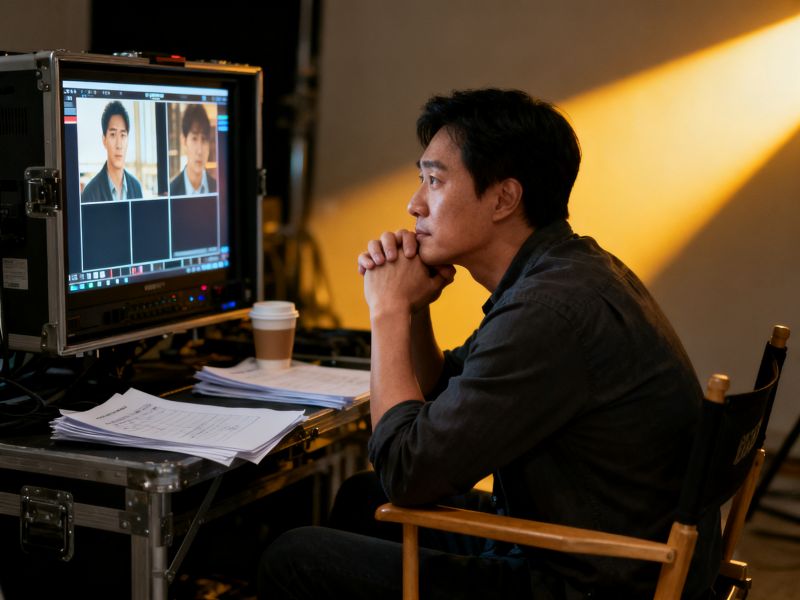
Kim Tae-hyun doesn't give many interviews. When he does, he sits with his back to the window。hands folded, and answers questions in short, deliberate bursts. That reticence has led some to label him aloof. Spend an afternoon on the set of his latest production, though, and the label evaporates. He moves between camera rigs and lighting crews like a conductor tuning an orchestra—never raising his voice, rarely repeating himself. His authority is absolute, yet it feels collaborative. That paradox, I think, is the key to understanding why his films since the mid-2010s have quietly reshaped the aesthetic vocabulary of Korean independent cinema.Kim Tae-hyun's early work was anything but assured. His 2014 debut, a micro-budget drama shot on borrowed equipment in Busan, nearly disappeared after a two-week run in a single theater. I tracked down a rare DVD copy last year;the film is rough, uneven, and occasionally self-indulgent. But it contains one sequence—a six-minute static shot of a father and daughter eating noodles in silence—that already displays the patience and emotional precision that would define his later work. Kim Tae-hyun has said in a rare public appearance that he cut the scene three times before deciding to leave it almost exactly as scripted. That instinct to trust stillness over motion is now his signature。though back then it looked more like stubbornness than strategy.By 2018。
critics began to notice. His second feature, a psychological thriller set in a Seoul apartment complex, won the New Currents award at Busan and earned a distribution deal in Japan. What struck me most wasn't the plot—a fairly conventional revenge arc—but the sound design. Kim Tae-hyun insisted on recording ambient noise from the actual building for three weeks, layering footsteps, elevator hums, and distant arguments until the environment itself became a character. Audiences felt claustrophobic without knowing why. It's the kind of painstaking detail that separates competent directors from distinctive ones. Kim Tae-hyun is firmly in the latter camp, though he'd probably resist the compliment.His recent shift toward producing other directors' projects has raised eyebrows. Some see it as a retreat from personal filmmaking;I see it differently. Kim Tae-hyun has quietly funded two debut features by young filmmakers from regional film schools, neither of which bears his name in the credits. When asked about it at a panel discussion in Jeonju。
he shrugged and said, "Good movies shouldn't depend on one person's schedule." That pragmatic generosity is rare in an industry obsessed with auteur branding. It also suggests that Kim Tae-hyun's influence will outlast his own filmography—a quieter legacy, but arguably a more durable one.